During the Austro-Hungarian period (1878–1918), Bileća changed rapidly with the arrival of new residents: civil servants, military officers, doctors, artisans, and teachers, who often came with their families. Coming from diverse faiths and backgrounds, these newcomers brought their own knowledge, customs, and ways of furnishing and decorating the home. Together with the local inhabitants, they helped shape the town and develop its modern urban culture.
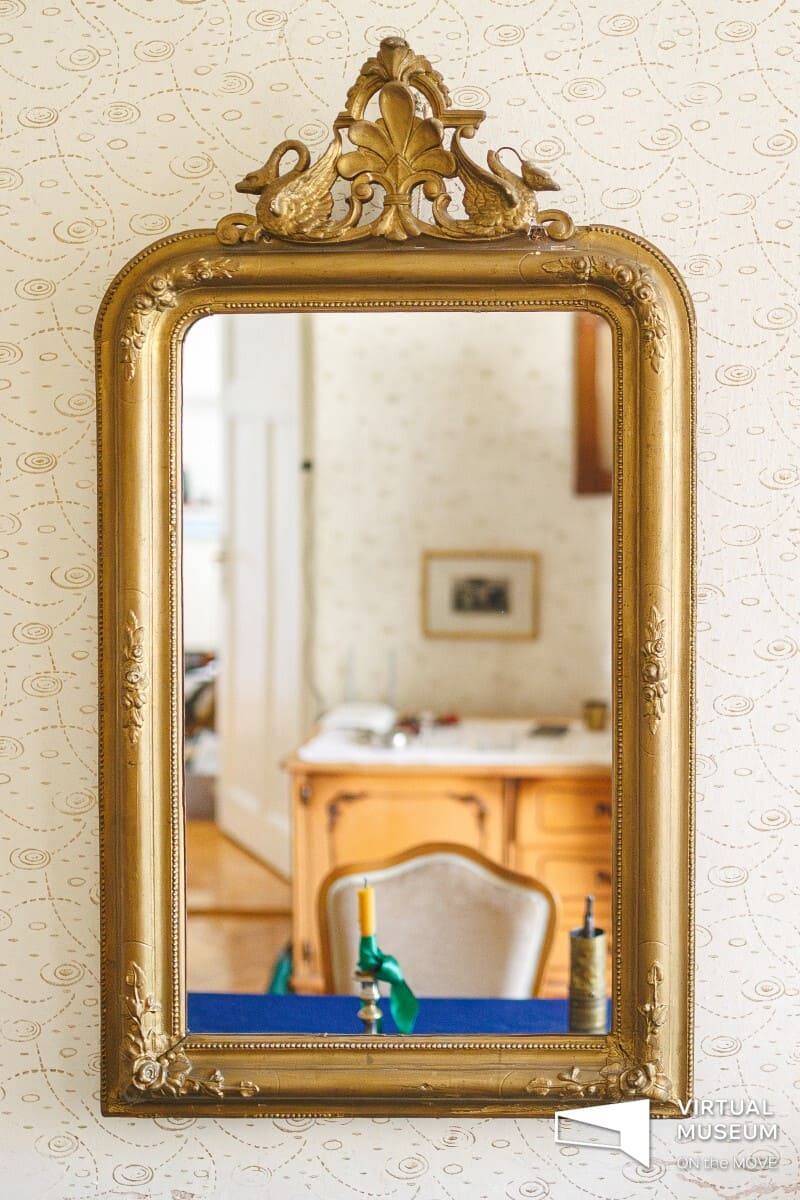
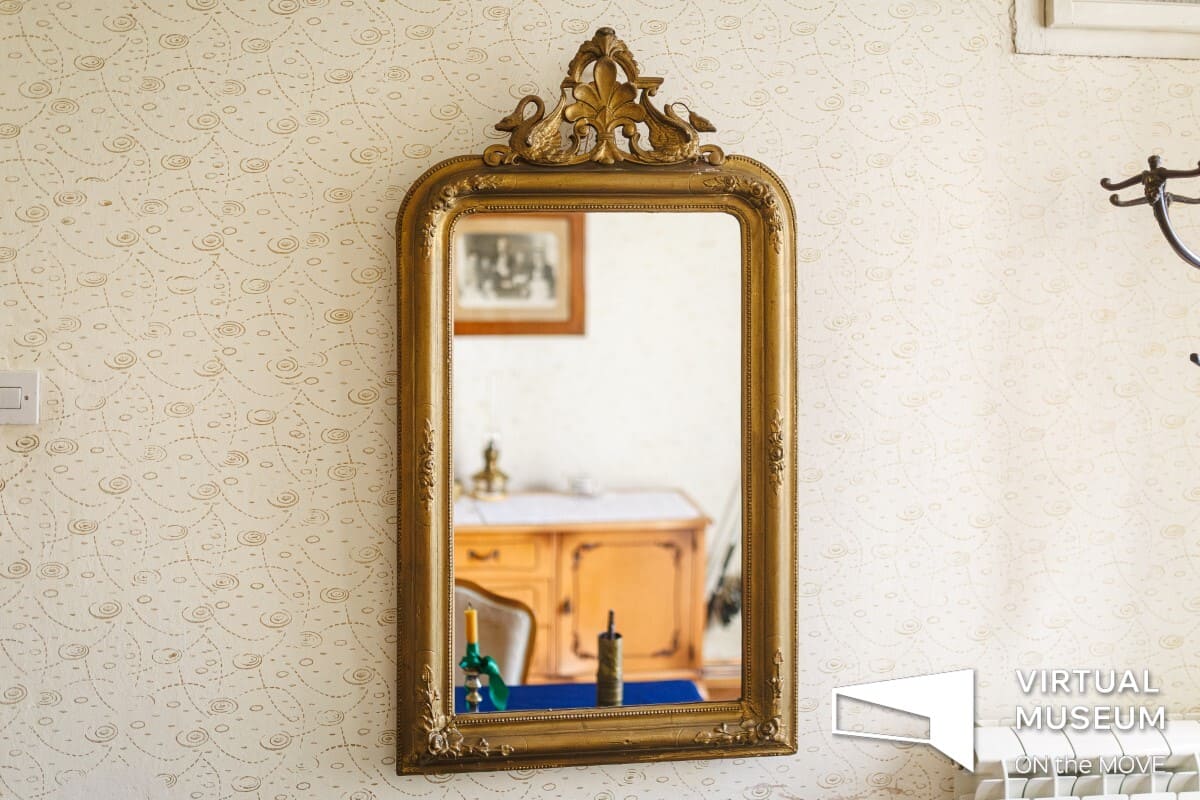
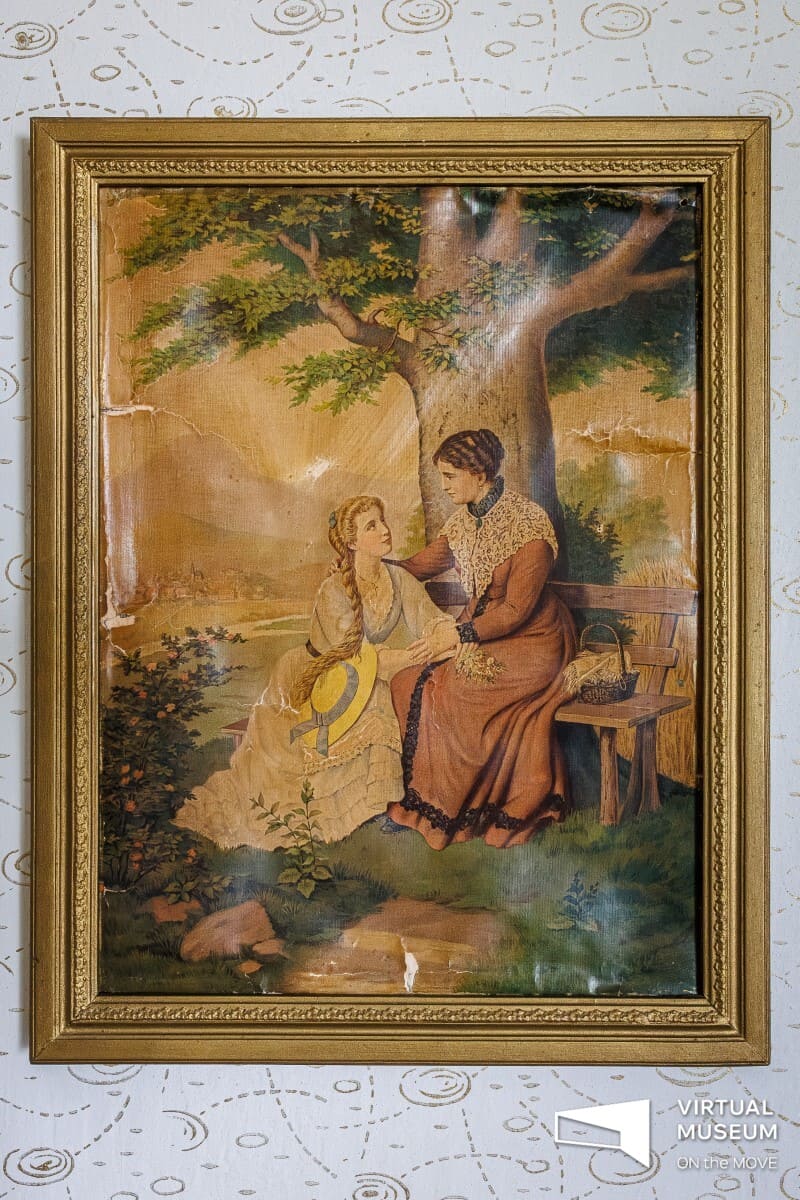
Traces of this time are also preserved in the family heirlooms of Lazar Gnjato. The items selected for the Virtual Museum are a wall mirror, two chromolithographs, and a fork with a hinged mechanism. According to family tradition, these objects were a gift to Milka Gnjato, Lazar’s grandmother, from the wife of an Austro-Hungarian official.
The mirror is distinguished by floral relief motifs and a pair of swans adorning the crest of the frame.
Photograph by Jovan Vidaković
Photograph by Jovan Vidaković
The two chromolithographs show tender scenes of parents and children under tree canopies.
Photograph by Jovan Vidaković
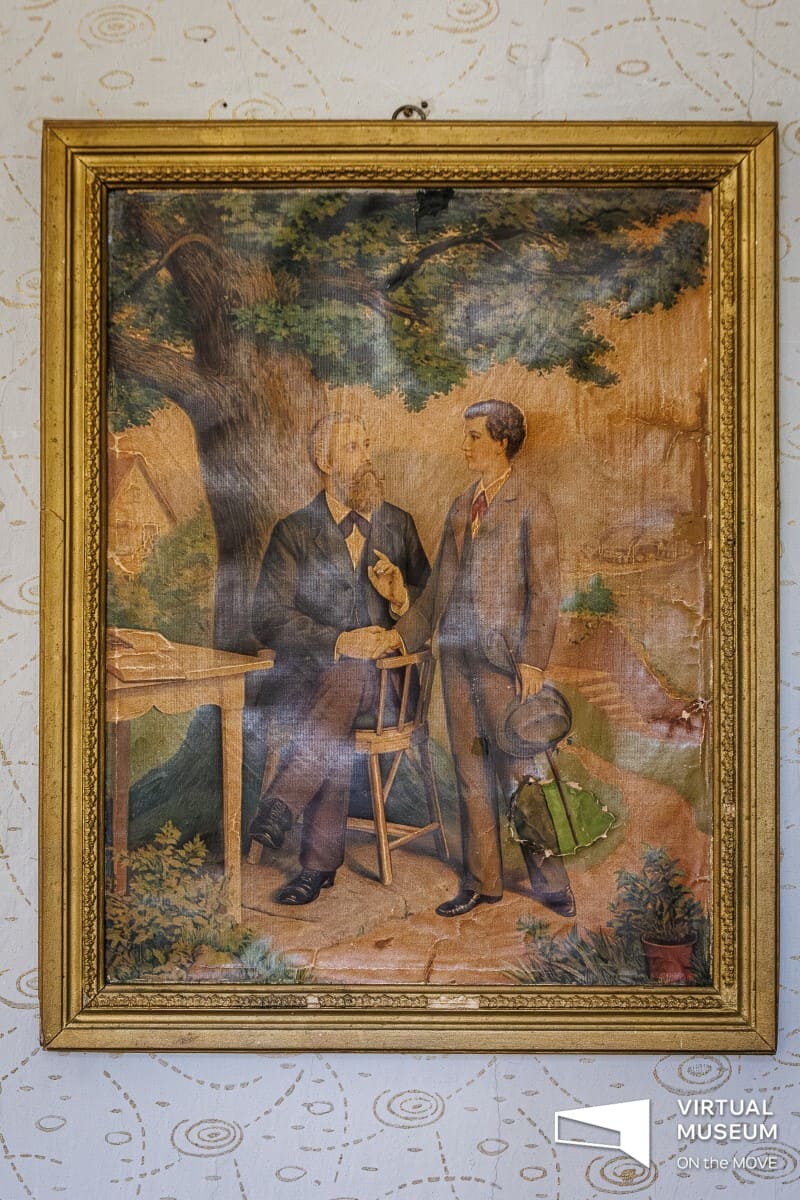
Photograph by Jovan Vidaković
The hinged fork completes this small collection of everyday household items from the past.
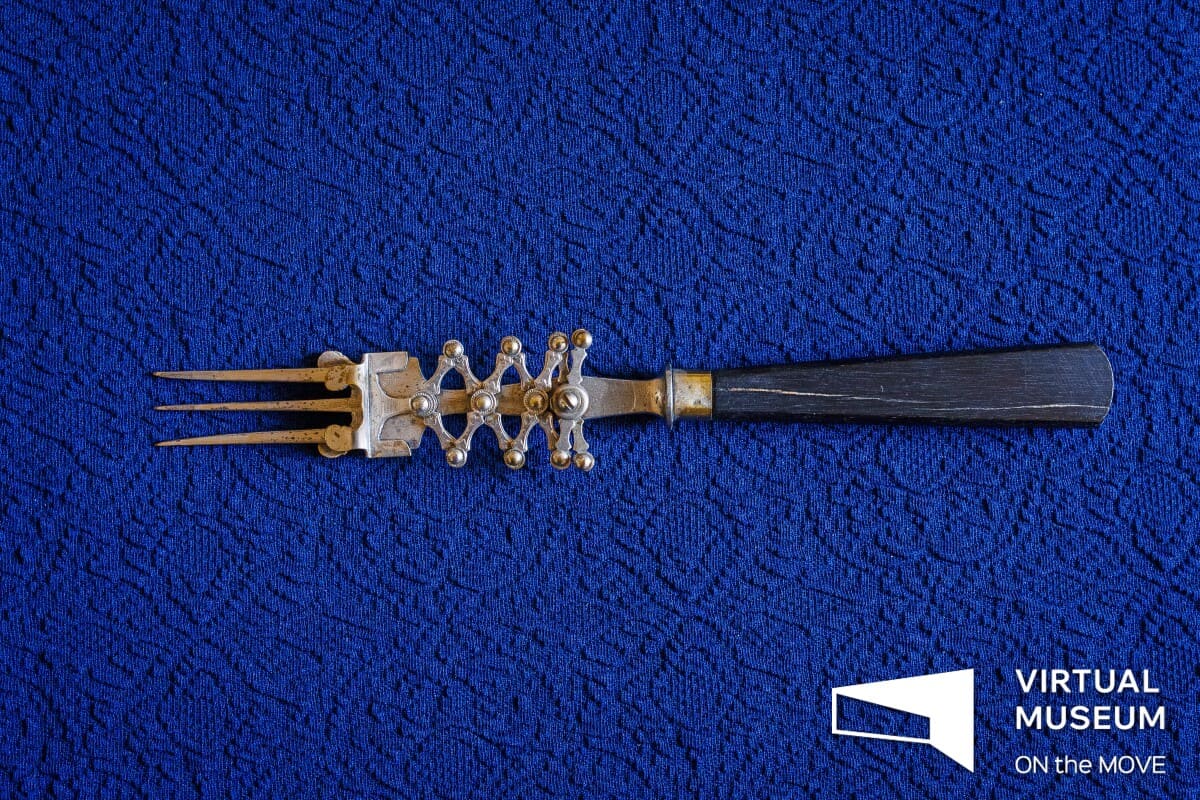
Photograph by Jovan Vidaković
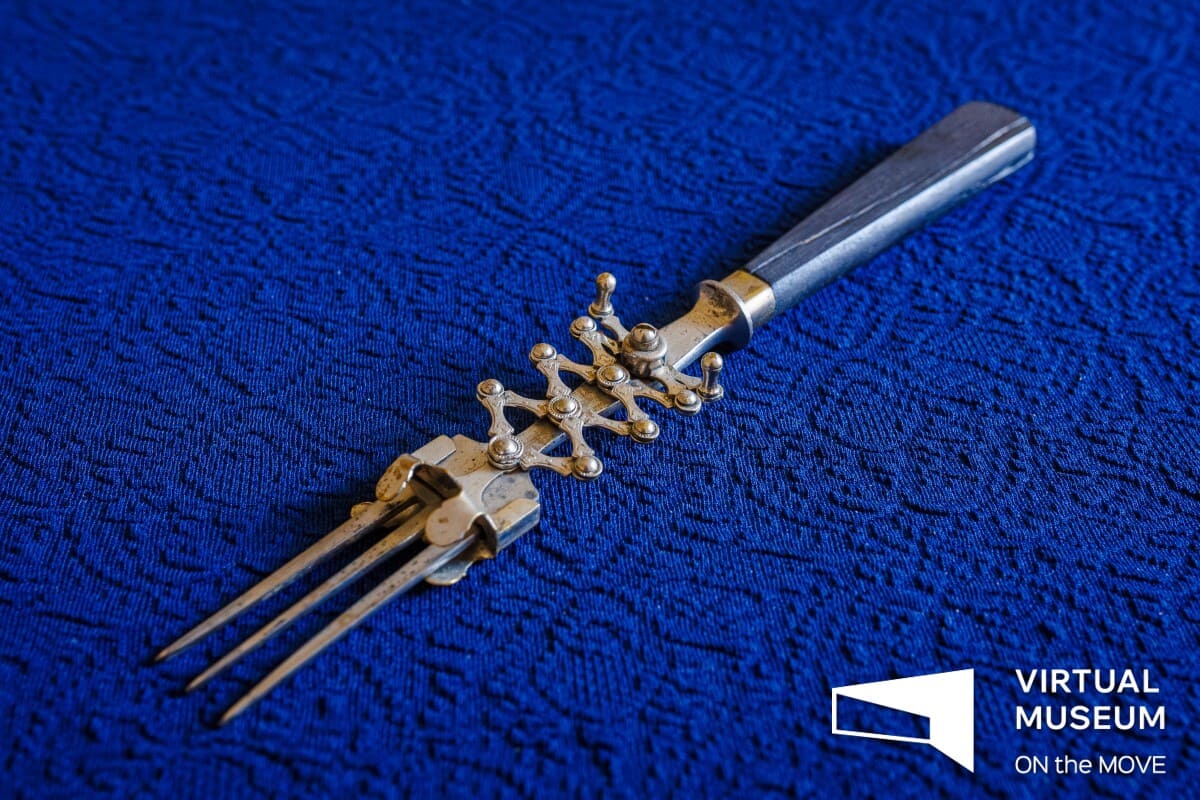
Photograph by Jovan Vidaković
Today, these objects tell the story of how domestic culture and everyday life evolved in Bileća during the Austro-Hungarian era.